
Summer Storm Water Damage in Wisconsin: What Homeowners Should Watch For
August can bring heavy rain, thunderstorms, high winds, and sudden downpours across Wisconsin.
Even when a storm does not cause obvious flooding, it can still create water problems around a home.
Roof leaks, overwhelmed sump pumps, clogged drainage systems, foundation seepage, and water entering around windows can all lead to damage that is not immediately visible.
Knowing what to check after a strong summer storm can help homeowners catch problems early.
Check Your Basement First
Basements are one of the first places homeowners should inspect after heavy rain.
Look for:
- Damp walls
- Water along the floor
- Wet carpet
- Moisture near basement windows
- Water stains
- Musty odors
- Signs that the sump pump has been running excessively
Even a small amount of water can be worth investigating.
If water is repeatedly entering the same area, there may be a drainage, foundation, or sump pump issue that needs attention.
Inspect Around Windows and Doors
Wind-driven rain can sometimes enter around windows, doors, or poorly sealed exterior openings.
After a storm, look for:
- Damp drywall
- Peeling paint
- Water stains
- Wet trim
- Soft or swollen materials
Water may travel farther than expected once it enters a wall.
A wet spot near a window may not always be limited to the area you can see.
Look Up
Roof leaks do not always produce an obvious stream of water.
Sometimes the first sign is a stain on the ceiling.
After a strong storm, check ceilings and upper-level walls for:
- Brown or yellow stains
- Bubbling paint
- Soft drywall
- Sagging areas
- Damp insulation in accessible areas
A small roof leak can allow moisture to spread through insulation, drywall, and framing.
If you notice signs of a roof leak, the roofing problem should be addressed along with the resulting water damage.
Pay Attention to Your Sump Pump
Heavy rain can put a sump pump under a lot of pressure.
If the pump stops working, loses power, or cannot keep up with incoming water, the basement can flood quickly.
After a major storm, check that your sump pump is operating normally.
Watch for:
- Unusual sounds
- Water around the sump pit
- A pump that runs constantly
- A pump that does not turn on
- Problems with the discharge line
If your home relies heavily on a sump pump, a battery backup may also provide additional protection during power outages.
Check Gutters and Downspouts
Heavy rain can overwhelm gutters, especially when they are filled with leaves, roofing debris, or other material.
When water spills over the gutter instead of flowing through the downspout, it may collect near the foundation.
Make sure:
- Gutters are clear
- Downspouts are connected
- Water is being directed away from the home
- Water is not pooling next to the foundation
Problems with drainage around the exterior of the home can contribute to basement water intrusion.
Don't Assume Everything Is Dry Because the Water Is Gone
One of the biggest mistakes homeowners can make after a water event is assuming the problem is over once visible water disappears.
Moisture can remain:
- Under flooring
- Behind baseboards
- Inside wall cavities
- In insulation
- Beneath carpet and padding
- Inside wood framing
These areas may stay wet much longer than the exposed surface.
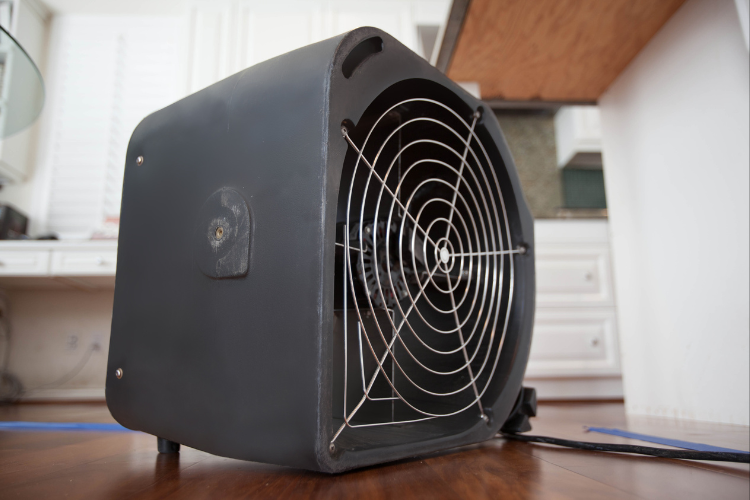
Professional water damage restoration may include moisture detection, water extraction, air movement, dehumidification, and monitoring to make sure affected materials are actually drying.
When Is Professional Water Damage Restoration Necessary?
Not every small spill requires professional restoration.
However, it may be time to call a water damage professional if:
- Water affected drywall, flooring, or insulation
- The water spread into multiple rooms
- The source of the moisture is unclear
- The area has remained wet
- You notice persistent musty odors
- Water came through a ceiling or wall
- Your basement experienced significant flooding
The sooner moisture problems are identified, the easier it may be to limit additional damage.
Document the Damage
If storm-related water damage is significant, take photographs before moving or removing damaged items when it is safe to do so.
Document:
- Areas where water entered
- Damaged flooring or drywall
- Wet furniture
- Damaged personal belongings
- Visible standing water
Depending on the situation and your insurance policy, this documentation may be helpful if you need to file a claim.
After the Storm, Take a Few Minutes to Inspect Your Home
Wisconsin summer storms can move through quickly.
Water damage can develop just as fast.
After heavy rain, inspect your basement, ceilings, windows, sump pump, gutters, and foundation.
You do not need to find a flooded room for there to be a water problem.
Sometimes a damp wall, small stain, or musty smell is the first warning.
Superior Cleaning & Restoration provides professional water damage cleanup, water extraction, and structural drying for homeowners throughout Plover, Stevens Point, Wisconsin Rapids, and surrounding Central Wisconsin communities.
If a summer storm leaves water behind, identifying the problem early can help keep a small issue from becoming a much larger one.
More To Explore